Erős kezdéssel indult az európai digitalizáció 2021-ben
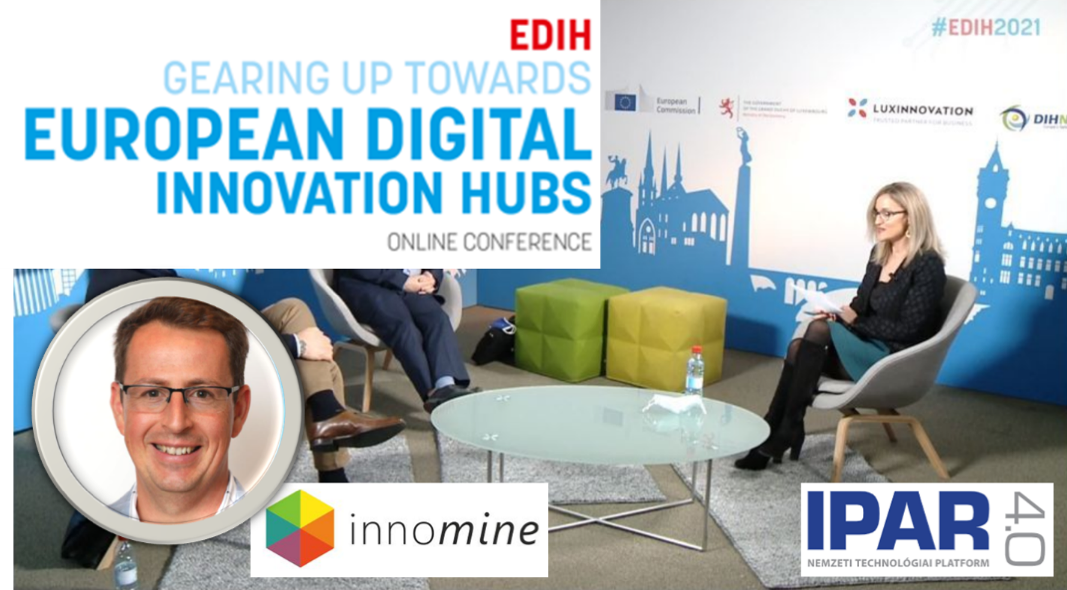
The EDIH conference took the European Digital Innovation Hub by storm, kicking off 2021 with the first public conference in the industry. the European Commission and its Member States strive to support digitalization in 2021 even more so through collaborations with European Digital Innovation Hubs. As the rise of innovation is recognized to advance European economy and society. The main focal point and topic of the EDIH conference was the role Digital Innovations Hubs play in supporting and actualizing innovation for European industries, companies and project efforts.
The presentations were accompanied by an interactive panel and illustrated with real examples from two different projects how DIHs often support and disseminate HPC technologies, going in depth to explain the landscape structure too. Seeing as European SMEs are sometimes lagging in terms of advanced digitization, it is imperative that DIHs step in to speed up and boost innovation. Especially when analyzing and measuring the resilience of companies, like for instance SMEs who are already digitized during the shocks of COVID19 – the evidence shows they were able to keep and/or accelerate their competitive edge. To get there, classic heterogenous SMEs need customized approaches, and that’s where DIHs can serve as bridges between international technology systems, knowledge, expertise and local SMEs.
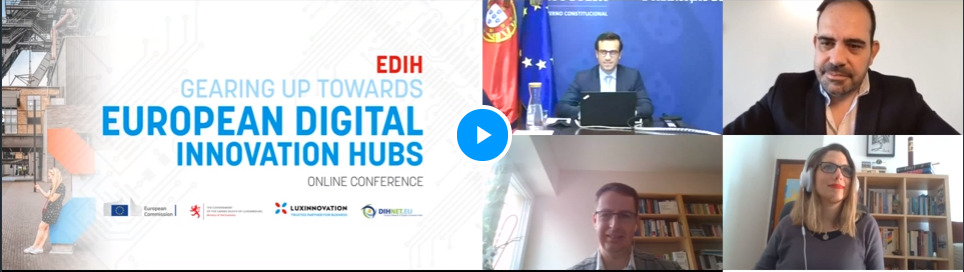
On the second day of the EDIH conference, innomine’s very own, CEO Gábor Vicze, spoke about the company’s involvement with the DIH projects. His speech focused on DIHs support in recovering the EU economy during and after pandemic. Gabor touched upon H2020 projects, Cloudifacturing, DIH4CPS and DIGITbrain; presenting use-case examples of how digital SMEs were more resilient during the COVID19 crisis with immense opportunity to further enhance their growth in online form. As the conference presentations came to an end, the panelists monitoring the session, Ulrich Thombansen (Fraunhofer Institute, Amable project), Jorge Cabaco and Vanessia Nascimento (Algarve DIH) and Arthur Jordao (Ministry for Economy and Digital Transition) – concluded during the Q&A portion, that it’s more evident than ever that continuous public investment is needed to boost the digitalization of European SMEs.
Related posts